Convert clothing sizes across US, EU, UK, and international charts for men's and women's tops, pants, dresses, and jackets.
Last updated
Chart conversion only
Clothing sizes do not map perfectly between countries or brands. This converter translates common US, EU, UK, and general size labels so you can start in the right range before checking the brand's own measurement chart.
Fit check
Add the fabric and intended fit so the result can tell you which neighbouring row to compare on the brand chart.
Intended fit
Fabric give
What this page helps with
Use it when a store lists the same garment in another market's labels, when you are comparing cross-border product pages, or when you want a quick chart-based starting point before checking brand measurements.
Clothing-size conversion
Men's tops — US 34
Compare the selected chart row across common regional labels, then use the adjacent size references only as a shopping starting point.
Selected chart size
34
International label
XS
Size below
—
Size above
36
Brand-chart fit check
Medium fit-risk check
Use the converted label as the starting row, then compare the brand chart and customer fit notes before choosing between adjacent sizes.
Verify these measurements before ordering:
Chest
shoulder width
sleeve length
International clothing-size sheet
System
Equivalent size
Notes
International
XS
General alpha or chart label used to anchor the size row before regional conversion.
US
34
Selected source label.
EU
44
Use as the EU starting label for this garment type.
UK
34
Use as the UK starting label for this garment type.
Fit reminder Use chest-based chart conversions as a starting point. Shoulder width, slim vs relaxed cut, and fabric stretch still change the real fit.
Clothing Size Converter: US, EU, UK, and international chart guide
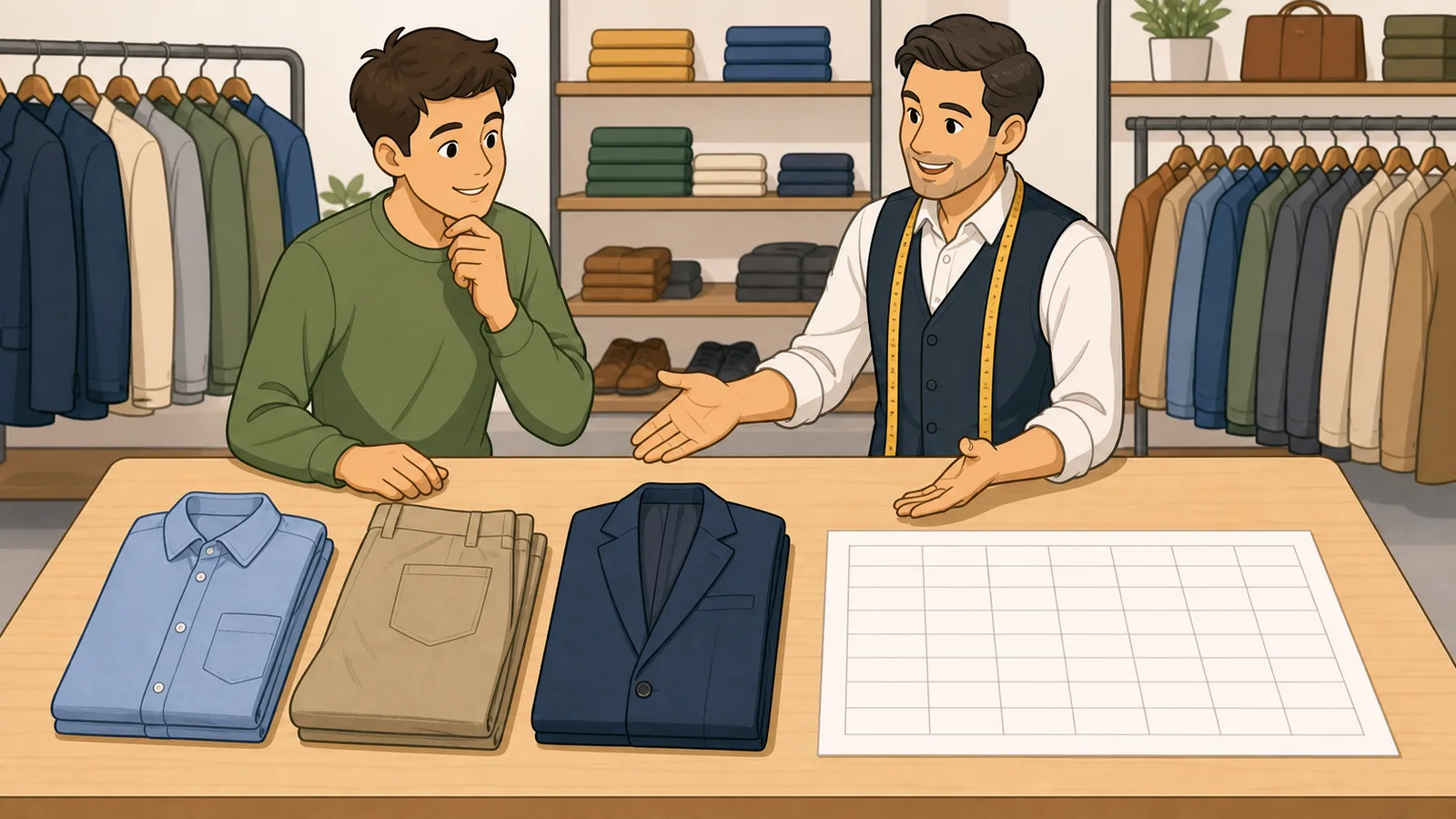
Clothing size conversion is only reliable when you treat it as a chart-matching exercise, not a promise that every brand will fit the same way. This clothing size converter compares common US, EU, UK, and international size labels across men's and women's tops, pants, dresses, and jackets so you can start in the right range before checking the brand's own measurement table.
Why clothing sizes drift between countries and brands
Clothing labels look precise, but they are only shorthand for a brand's own measurement block and fit intent. A US size 8, an EU 38, and a UK 12 often occupy the same conversion row, yet the actual garment can still fit differently because brands change ease, silhouette, fabric stretch, and grading assumptions.
That is why a good clothing size converter should be treated as a starting map. It helps you translate the likely label between markets, but it cannot replace the final garment-specific measurement chart when bust, waist, hip, chest, rise, or shoulder dimensions matter to the purchase.
How to use a clothing size converter well
Start from the label that already fits you reasonably well in the garment family you are shopping. Convert that row across the other systems, then compare the translated label against the retailer's own size chart instead of assuming the converted label is automatically correct.
This sequence matters because tops, dresses, pants, and jackets do not grade the same way. Pants may track waist more tightly than tops, dresses depend on bust-waist-hip balance, and jackets often need additional room for layering or tailoring. The converter gets you to the right row; the retailer chart confirms the actual fit target.
Why the fit-risk check matters before ordering
A US to EU clothing size conversion or UK to US clothing size conversion can tell you the likely label row, but it still leaves a purchase decision. A rigid tailored jacket, close-fitting dress, or non-stretch pair of trousers has less tolerance for a chart mismatch than a relaxed knit top. That is why the calculator asks about intended fit and fabric give before it interprets the result.
The fit-risk check turns the conversion into a shopping workflow: choose the known label, read the equivalent clothing size chart row, then verify the measurements that matter for that garment family. If the result flags a higher-risk fit, compare the selected row with the next size up on the brand chart before you order. If the fabric is stretchy and the cut is relaxed, the selected row may be a better starting point, but the brand's own chart still controls the final decision.
Measurements to check for each garment family
For men's tops and jackets, chest, shoulder width, sleeve length, and layering room usually matter more than the alpha label alone. For men's pants, the label needs to be checked against waist, seat or hip room, rise, and inseam because two trousers with the same nominal waist can still fit differently through the thigh and seat.
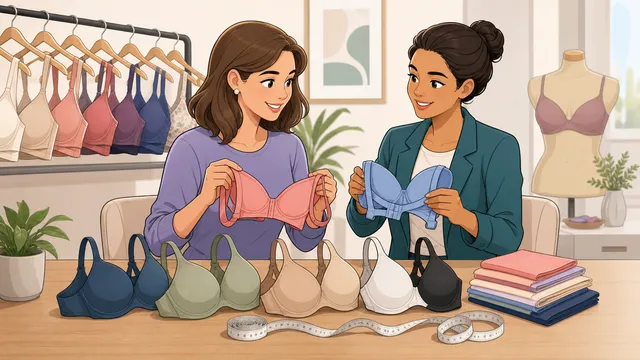
For women's tops and jackets, bust and shoulder fit often decide whether the converted label is wearable. For dresses, bust, waist, hip, and length all matter because one body measurement can sit between rows even when the overall clothing size conversion looks correct. For women's pants, waist, hip, rise, and inseam checks reduce the risk of relying on a single regional number.
When the international label helps most
General labels such as XS, S, M, or L are useful for quickly anchoring tops and some casual garments, especially when the regional number changes but the overall row stays the same. They are less definitive for tailored items because the same alpha label can still hide different chest or shoulder measurements.
Numeric systems become more important when you move into dresses, pants, or jackets. Those garments often depend on specific body measurements and cut details, so the international label is helpful for orientation, but the regional number is usually the better shopping checkpoint.
Worked examples for common shopping situations
If a men's top that fits well is labelled US 38-40, the same chart row often converts to EU 48-50 and UK 38-40 with a general label of M. If you move to another store and the converted row feels close but not exact, checking the next size up and down is often more useful than guessing from a completely different chart family.
If a women's dress fits at US 8, the common chart row is usually EU 38 and UK 12. That gets you into the correct neighborhood, but the final choice can still shift if the dress is cut slim through the waist, relaxed through the hip, or uses a fabric with little stretch.
Frequently asked questions
Is a converted clothing size guaranteed to fit?
No. A converted label is only a chart-based starting point. Brand grading, fabric stretch, cut, and intended silhouette can still move the real fit even when the nominal size row looks equivalent.
Why do tops and pants need different size guidance?
Because they anchor on different body measurements and fitting priorities. Tops and jackets depend more on chest, bust, shoulder, and ease, while pants depend more on waist, hip, rise, inseam, and stretch. One conversion row does not behave identically across all garment families.
Should I trust the international label or the regional number?
Use the international label as a quick orientation tool and the regional number as the stronger shopping checkpoint. Alpha labels like M or L help you find the right row, but the regional number is usually more precise for dresses, pants, and jackets.
What should I do if I sit between two converted sizes?
Check the retailer's measurements first, then compare the adjacent chart rows shown by the converter. Which side to choose depends on the garment: slim tailoring and rigid fabrics often need more measurement precision than relaxed knits or stretchy casual wear.
How do I convert US clothing sizes to EU or UK sizes?
Choose the garment family, set the source system to US, and select the size label that already fits you. The converter shows the equivalent EU and UK row, plus the adjacent size labels you should compare when the brand chart or fabric suggests you may sit between rows.
Is an international clothing size chart better than body measurements?
No. An international clothing size chart is useful for translating labels, but body measurements are stronger for the final purchase decision. Use the converted label to find the likely row, then check the brand's bust, chest, waist, hip, shoulder, sleeve, rise, or inseam measurements for the garment you are buying.