Calculate a starting bra size from band and bust measurements, compare UK, US, EU, AU/NZ, FR/ES, IT, and JP labels.
Last updated
Bra size calculator for measurement, conversion, and sister-size planning Measure your band and bust to estimate a starting bra size, then compare UK, US, EU, AU/NZ, FR/ES, IT, JP, and nearby sister sizes before you buy.
How to measure
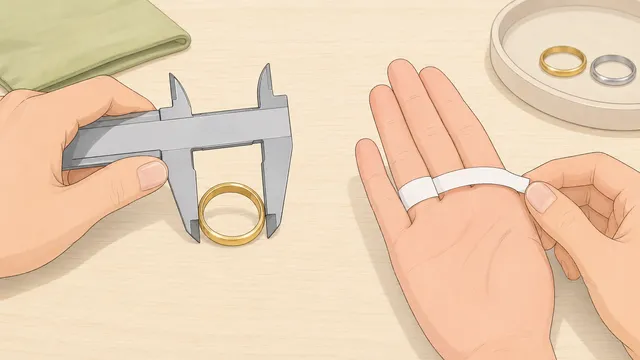
Take the underbust measurement snug and level around the ribcage, then take the bust measurement around the fullest part without compressing. Use the result as a starting size, not a guaranteed final fit.
Quick examples
Load a common measurement pattern to see how the starting size, conversion labels, and sister sizes change together.
Units
What this bra-size calculator is best at
The calculator rounds your band to a standard even size, compares bust minus band to find the cup letter, converts the result across major label systems, and shows sister sizes when the cup volume feels close but the band fit does not.
It is strongest as a shopping and measurement starting point. Final comfort still depends on bra shape, wire width, fabric stretch, and the brand’s own grading.
Result
34C
Estimated US bra size based on your measurements.
UK size
34C
EU size
75C
Band size
34
Cup letter
C
Cup difference
3 in
Sister size down
32D
Try this if the band feels too loose but the cup volume feels close.
Sister size up
36B
Try this if the band feels too tight but the cup volume feels close.
Use this as a starting size Try the estimated size first, then move to a sister size if the cup volume feels close but the band tension is wrong.
Next fit checks
Use these nearby sizes after trying the starting size. Sister sizes help when band tension is the problem; same-band cup changes help when the band is stable but the cup volume is off.
Band feels loose
32D
Try one band down and one cup up to keep similar cup volume with a firmer band.
Band feels tight
36B
Try one band up and one cup down to keep similar cup volume with more band room.
Cups spill or gore floats
34D
Try the next cup up on the same band before changing band size.
Cups gape or wrinkle
34B
Try the next cup down on the same band if the band already feels stable.
International bra-size sheet
System
Equivalent size
Notes
US
34C
Primary starting size from your measurements.
UK
34C
Chart equivalent only — confirm against the brand fit guide.
EU
75C
Chart equivalent only — confirm against the brand fit guide.
AU/NZ
12C
Chart equivalent only — confirm against the brand fit guide.
FR/ES
90C
Chart equivalent only — confirm against the brand fit guide.
IT
3C
Chart equivalent only — confirm against the brand fit guide.
JP
75C
Chart equivalent only — confirm against the brand fit guide.
How it works
Your underbust measurement is 34 in after conversion, rounded to the nearest even band: 34.
The cup size is determined by bust minus the rounded band, which is currently about 3 inches and rounds to a 3 inch cup step.
This result is close to a cup-rounding boundary, so remeasuring can move the starting cup by one step.
Because label systems diverge after D and brands grade cups differently, the converted sizes are chart equivalents and the sister sizes are the first nearby sizes to try when the volume feels close but the band does not.
Bra Size Calculator: how to measure, compare sister sizes, and convert internationally
A bra size calculator turns your underbust and bust measurements into a starting bra size, then helps you compare UK, US, EU, AU/NZ, FR/ES, IT, and JP labels before you buy. The most useful calculators do more than output one size: they explain sister sizes, show why cup letters change across markets, and help you decide whether the band, the cup, or the conversion chart is the real issue.
How bra size is determined
Bra sizing uses two measurements: the band, taken around the underbust, and the bust, taken around the fullest part of the chest. The underbust determines the band number, while the difference between bust and band determines the cup letter. A good bra size calculator keeps those two steps tied together so the result reflects the full size rather than a cup letter floating on its own.
That matters because cup letters are relative to the band. A 32C and a 38C do not represent the same cup volume, even though the letter looks identical. The useful question is not just 'what cup am I?' but 'what full band-and-cup combination is the best starting point from these measurements?'
How to measure for a bra size calculator
Measure your band directly under the bust with the tape level and snug, but not digging in. For the bust, measure around the fullest part of the chest while keeping the tape level and avoiding compression. The calculator works best when both measurements are taken on bare skin or over a thin, unpadded bra rather than a heavily padded style that adds extra volume.
If your measurements sit between sizes, do not force the result to sound more precise than it is. Small changes in posture, breathing, tape tension, or bra style can move the answer by one band or one cup step. That is why a measurement calculator is strongest as a starting-size tool, not a promise that every bra labelled that way will fit perfectly.
Sister sizes and fit adjustments
Sister sizes are nearby sizes that keep roughly the same cup volume while changing the band length. For example, a 34C has sister sizes at 32D and 36B. If the cup volume feels close but the band feels too loose or too tight, sister sizes are usually the first fit adjustment worth trying.
That does not mean sister sizes solve every problem. They preserve approximate volume, not identical support, strap placement, wire width, or cup shape. If the underwire is sitting on breast tissue, the gore will not tack, or the cup wrinkles in the wrong places, the issue may be shape mismatch rather than simple band tension.
Why UK, US, EU, AU, FR, IT, and JP labels do not line up perfectly
UK and US systems share familiar band numbers, but the cup-letter progression can split after D. EU-style systems change the band numbering more visibly, and FR, IT, AU/NZ, and JP labels often look different again even when they are chart equivalents. That is why a bra size measurement calculator is more useful when it shows conversions directly instead of expecting you to translate them manually.
These conversion rows are still chart guides, not guarantees. A label-equivalent 75C, 90C, or 12C can still fit differently from a 34C because brands choose different wires, cup depths, elastic tension, and grading rules. The conversion table gets you into the right neighbourhood; the brand chart and the actual fit decide the final choice.
Worked example: 34 band and 37 bust
A 34 inch underbust and a 37 inch bust create a 3 inch difference, which maps to a C cup in common US and UK charts. That gives a starting result of 34C. The same chart row then maps across other common systems such as EU 75C, AU/NZ 12C, FR/ES 90C, IT 3C, and JP 75C.
That example is useful because it shows three distinct jobs on one page. First, the calculator estimates the starting size. Second, the conversion row shows how the same general size appears on international labels. Third, the sister-size row suggests what to try next if the cup volume feels close but the band tension is wrong.
Worked example: metric measurements and conversion confidence
If your tape is metric-first, the same logic still applies. A measurement around 86 cm under the bust and 94 cm around the bust typically lands in the same starting row as the 34 and 37 inch example. The practical advantage of a calculator is that it translates the raw tape measurements into a standardised shopping starting point without asking you to convert the units yourself first.
Metric shoppers still need the same caution: the label row can be correct while the final bra still feels wrong because of shape, stretch, or brand grading. Use the metric result to narrow the search quickly, then use sister sizes or the retailer size chart to refine the purchase decision.
How to tell whether the band or cup is the real problem
A bra can feel wrong even when the headline size looks plausible. If the band rides up, spins easily, or needs the tightest hook immediately, the band is probably too loose. If the band feels painfully firm while the cup volume seems close, the next sister size up is often the fastest check. If the band feels stable but the cup cuts in, gaps badly, or the gore will not sit flat, the issue is more likely the cup volume or cup shape.
This is why a useful bra size calculator should never stop at one number. The best version helps you diagnose the next step: remeasure, try a sister size, or compare against the brand's own chart when the calculator result and the real fit disagree.
Why bra size calculators can disagree
Simple two-measurement calculators are fast and useful for shopping, but they cannot see projection, root width, asymmetry, posture, or how breast tissue sits in different bra shapes. More detailed fitting calculators may ask for loose, snug, and tight underbust readings plus standing, leaning, and lying bust readings to reduce that uncertainty. Those extra measurements can change the cup estimate, especially when the standing bust underestimates volume.
The practical takeaway is to treat the calculated bra size as a ranked starting point. Try the headline size first, use the next-fit checks when the band or cup is clearly the issue, and remeasure if the result is near a rounding boundary or feels far away from your best current bra.
When to remeasure and when to check a brand chart
Body shape changes over time, and bra fit can shift with weight change, pregnancy, hormonal cycles, training changes, or simple garment wear. If bras that used to feel reliable start riding up, cutting in, or gaping, it is worth remeasuring rather than assuming the brand changed.
Use the calculator for the starting size, then use the brand's own guidance for the final purchase decision. That is especially important for brands with unusual cup progressions, extended-size grading, minimiser or balconette shapes, or fit notes that intentionally run firm or relaxed in the band.
Frequently asked questions
How often should I remeasure my bra size?
Body shape changes with weight fluctuations, hormonal cycles, pregnancy, and ageing. Remeasuring every six to twelve months, or whenever a bra starts feeling uncomfortable, is a practical guideline.
Why do different brands fit differently in the same size?
There is no universal standard enforced across manufacturers. Cup depth, wire width, gore height, and fabric stretch all vary by brand and style, so a 34D from one maker may fit differently from another.
How do I calculate my bra size from measurements?
Measure the band around your underbust and the bust around the fullest part of your chest, then compare the difference to a cup chart. This calculator performs that mapping for you, estimates the starting size, and shows international equivalents plus sister sizes.
What are sister sizes in bra fitting?
Sister sizes are nearby sizes that keep roughly the same cup volume while changing the band. A tighter band usually means going up a cup, while a looser band usually means going down a cup.
Should I measure over a padded bra?
No. A padded bra can distort both the band and bust measurements. Bare skin or a thin, unpadded bra gives the most reliable starting result.
Why do UK and US cup letters differ after D?
US and UK sizing use the same band numbers but different cup-letter progressions above D. That is why a chart conversion can change DD, DDD, or F into different local labels depending on the region.
Why can the same bra size fit differently across styles?
Bra fit depends on more than the label. Wire width, cup depth, gore height, strap placement, padding, and fabric stretch all affect the real fit, so two bras in the same nominal size can still feel very different.
What should I do if my band feels too tight but the cups seem close?
Try the sister size up first. Moving up one band and down one cup usually preserves approximate cup volume while giving the band more room. If that still feels wrong, compare the brand chart and consider remeasuring.
What should I do if the band feels fine but the cups gape or cut in?
That usually points to a cup-volume or cup-shape issue rather than a pure band problem. Try adjusting the cup size first, then compare the style's shape and the brand's fit notes if the calculator size seems close but not right.
Is a bra size calculator the same as a bra size converter?
No. A calculator starts from body measurements to estimate a size. A converter starts from a bra size you already know and translates that label across other systems. Many shoppers need both: the calculator to find the starting size and the converter to shop different markets.
Do cup letters mean the same thing on every band size?
No. Cup letters are relative to the band, so a C cup on a 32 band is not the same volume as a C cup on a 38 band. The full size must be treated as one unit.
Should I trust the calculator or the brand chart when they disagree?
Use the calculator to reach the right size neighbourhood, then trust the brand chart and the fit notes for the final decision. Brands sometimes grade extended ranges or specialty styles differently from generic charts.
Why did another bra size calculator give me a different result?
Calculators use different assumptions. Some use only underbust and bust, while more detailed fitting tools ask for several underbust and bust measurements in different positions. If two results differ, recheck the tape placement, look for whether the result is close to a rounding boundary, and try the nearby fit checks rather than treating either result as final.
Can I use this bra size calculator for sports bras or bralettes?
It can help you estimate the underlying bra-size row, but sports bras and bralettes often use different fit logic such as compression, encapsulation, or alpha sizing. Check the product's own chart before buying.