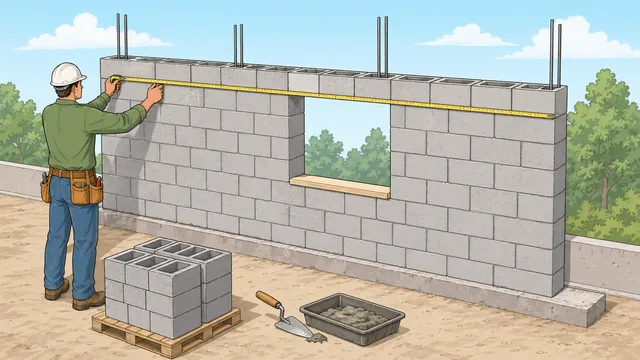
Use this brick calculator to estimate bricks needed for a wall or flat-lay patio, including opening deductions, imperial or metric brick size presets, waste.
Last updated
Brick quantity planner Estimate wall bricks or flat-lay paver bricks from the project area, brick face size, joint allowance, waste, opening deductions, mortar-bag coverage, and optional brick price.
Measurement basis
Quick examples
Project type
Brick and joint preset
Check product-specific yield before ordering Brick size, bond pattern, site cuts, and mortar-bag yield vary by supplier. Use the waste and coverage fields as visible assumptions, then confirm the actual brick and mortar product data.
Order estimate
347 bricks needed
Based on 48 sq ft of net wall area after 12 sq ft of opening deductions.
Gross area
60 sq ft
Net area
48 sq ft
Opening deductions
12 sq ft
Bricks per sq ft
6.55
Base bricks
315
Waste bricks
32
Mortar bags
2
At 35 sq ft per bag
Estimated material total
$294.95
Wall openings and mortar coverage are included Use the total opening area for doors and windows together. Mortar bags use the coverage assumption above, while bond pattern, corners, returns, and lintels can still push the final order above the estimate.
Brick wall quantity planning, opening deductions, and purchase allowance
A brick calculator helps you estimate how many bricks to order for a straight wall, garden wall, facade, or flat-lay patio strip before you start pricing or laying out the job.
What a brick calculator is estimating
A brick wall estimator turns a wall face into a coverage problem. Once you know the wall length and height, the main questions are how much area is lost to doors and windows, how much wall is left to build, and how much area one brick-and-mortar module will cover in the finished face.
That is why a brick quantity calculator is useful for garden walls, facades, extensions, partitions, and general masonry takeoffs. It gives you a planning figure for both the net brick count and the higher order quantity once you include a waste allowance for breakage, cuts, and handling loss.
Core brick wall formulas
The calculation starts with gross wall area, subtracts the rectangular openings you enter, and then divides the remaining net area by the visible face module of one brick plus its mortar joint. Waste is added after that base count so the result is easier to use for ordering.
Gross wall area = Wall length x Wall height
This is the total wall face before door and window deductions are removed.
Net area = Gross wall area - Opening area
Rectangular door and window openings are deducted from the wall face because they do not need brick coverage.
Brick module area = (Brick length + Mortar joint) x (Brick height + Mortar joint)
The working coverage is based on the visible brick face plus the joint allowance between adjacent courses and units.
Purchased quantity = ceil(Base brick count x (1 + Waste%))
Waste is applied after the net brick count to reflect breakage, cuts, and handling losses on site.
Why mortar joints and openings matter
A small change in mortar joint size can move the module area enough to affect the final brick count, especially on larger walls. That is why a brick estimator should work from the actual specified joint thickness instead of assuming one universal standard.
Openings matter for the same reason. A wall with a door and two windows can have much less net brick area than the gross face suggests, so deducting those voids gives you a more realistic material plan before you add the waste allowance.
Imperial, metric, and brick size presets
Brick estimating is easiest when the project dimensions and the brick module are kept in the measurement system used on the job. The calculator can work in feet and inches or in metres and millimetres, then keeps the area result in the matching square-foot or square-metre display so the takeoff remains easy to check.
The brick and joint presets are starting points only. A modular wall brick, queen brick, and 4 x 8 paver face cover common search intents, but manufacturers publish exact product dimensions and recommended joint widths. For a high-value order, enter the actual brick face size, paver face width, and joint or layout gap from the product data.
Wall mode versus patio or flat-lay mode
Wall mode estimates a vertical brick face. It uses wall length, wall height, opening deductions, brick height, mortar joint size, waste percentage, and optional mortar coverage per bag. That makes it suitable for a quick brick wall calculator, brick estimator, and wall material takeoff where doors and windows matter.
Patio mode uses length and width of a flat area instead. It treats the second brick dimension as the visible brick or paver face width and hides wall-only outputs such as opening deductions and mortar bags. Bedding material, edge restraint, border courses, drainage, and compaction still need a separate patio or paving specification.
Mortar coverage and price planning
Competitor brick calculators often show a mortar-bag count, but the useful version of that feature is an editable assumption rather than a hidden constant. This calculator asks for mortar coverage per bag in the selected area unit, then divides the net wall area by that coverage to create a visible rough bag count.
The cost output is also intentionally simple. Enter a price per brick if you want a material-only estimate for the waste-adjusted brick quantity. It does not include mortar, sand, delivery, pallet deposits, tax, labour, equipment, cutting discs, or supplier minimum charges.
Worked example
Suppose a straight wall is 10 ft long and 8 ft high, with 21 sq ft of combined door and window openings. The gross wall face is 80 sq ft, and the net brick area after deductions is 59 sq ft.
Using an 8 x 2.25 in brick with a 3/8 in mortar joint gives a working module of 8.375 x 2.625 in, or about 6.55 bricks per sq ft. That returns about 387 base bricks. With a 5% waste allowance, the purchase quantity rounds up to 407 bricks. If the wall-mode mortar assumption is 35 sq ft of wall coverage per bag, the rough mortar allowance rounds to 2 bags.
What this result does not cover
This calculator is a planning tool for straight wall quantities. It does not model bond pattern changes, corner returns, lintels, cavity-wall ties, reinforcement, movement joints, special shapes, or project-specific cutting strategy. It also assumes that each opening can be deducted as a simple rectangle.
Use the result as an ordering estimate, then confirm the final quantity from the actual masonry drawings, bond pattern, and specification before committing to a large purchase.
Frequently asked questions
How many bricks do I need for a wall?
Measure the wall face, subtract any door and window openings, divide the remaining area by the brick-and-joint module area, and then add a waste allowance. A brick calculator does those steps automatically and returns both the base brick count and the purchase quantity.
Why does mortar joint thickness change the brick estimate?
Because the effective coverage area of each brick includes the mortar joint. A thicker joint slightly increases the module area, which means fewer bricks are needed to cover the same wall face.
Should I deduct windows and doors when estimating bricks?
Yes. Opening deductions usually make a meaningful difference to the net wall area, especially on smaller walls where one door or window can remove a large share of the face.
Does this include bond pattern and corner returns?
No. The tool estimates straight wall face coverage only. Bond pattern, returns, lintels, and detailing can change the real quantity and should be checked from the masonry drawings or specification.
Can I use this as a metric brick calculator?
Yes. Switch the measurement basis to metric, enter project dimensions in metres and brick or joint dimensions in millimetres, and the calculator will keep the displayed wall or patio area in square metres while using the same brick module method.
How much waste should I add when ordering bricks?
A small straight wall may only need a modest allowance, while patios, cuts, pattern work, corners, colour blending, and fragile handling can justify more. Many practical takeoffs start around 5% to 10%, then adjust based on the bond pattern, cuts, and supplier advice.
Is the mortar bag estimate exact?
No. Mortar-bag yield depends on the product, joint size, wall thickness, workmanship, and waste. The calculator makes the coverage per bag visible so you can replace the default planning assumption with the coverage stated by the mortar supplier.
Can this estimate bricks for a patio or paver area?
Yes, use patio / flat mode for a face-coverage estimate from length, width, brick face size, layout gap, and waste allowance. It does not design the bedding layer, edge restraint, drainage, or pattern-specific border cuts.