Skip to content
Calcipedia
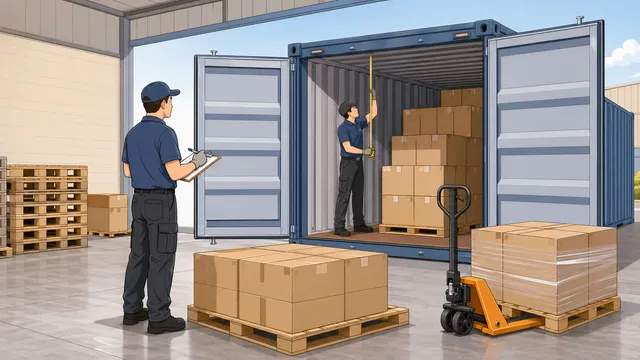
Pallet Calculator instructional illustration

Pallet Calculator

Use this pallet calculator to estimate boxes per pallet, TI/HI, gross pallet weight, and pallets needed for a shipment from carton and pallet dimensions.

Last updated

Use this pallet calculator to estimate boxes per pallet, TI/HI, gross pallet weight, and how many pallets you need for a shipment.

The model tests both box orientations, subtracts pallet deck height from the usable stack, and can cap the result at a pallet gross-weight limit when you know carton and pallet weights.

Units

Common pallet sizes

Pallet dimensions

Carton dimensions

Shipment and weight limits

What this planning model includes

TI is cartons per layer and HI is the maximum full-layer count by height. If you enter box weight and a gross pallet limit, the calculator also checks whether weight cuts the pallet below the full TI x HI pattern.

This is a column-stacking estimate rather than a mixed-pattern or overhang optimiser. Use the rotation control when labels, arrows, open tops, or fragile contents require cartons to stay in the entered footprint orientation.

Carton orientation

Result

36 boxes per pallet

TI/HI by height is 9 x 4. The recommended pallet plan is height-limited and uses the entered box orientation.

Boxes per layer (TI)
9
Layers by height (HI)
4
Layer pattern
3 x 3
Used stack height
120 cm
Remaining headroom
15.6 cm
Footprint utilisation
90%
Cube utilisation
79.6%
← All Logistics calculators

Logistics

Pallet calculator: boxes per pallet and pallets per shipment

A pallet calculator works out how many boxes fit on a single pallet given the pallet footprint and the box dimensions, and then calculates the number of pallets needed to ship a given quantity. It also optionally estimates total weight per pallet. For day-to-day warehouse planning, the most useful pallet loading calculator also shows TI/HI, partial final pallet detail, and whether height or gross pallet weight is the real limiting constraint.

How pallet loading is calculated

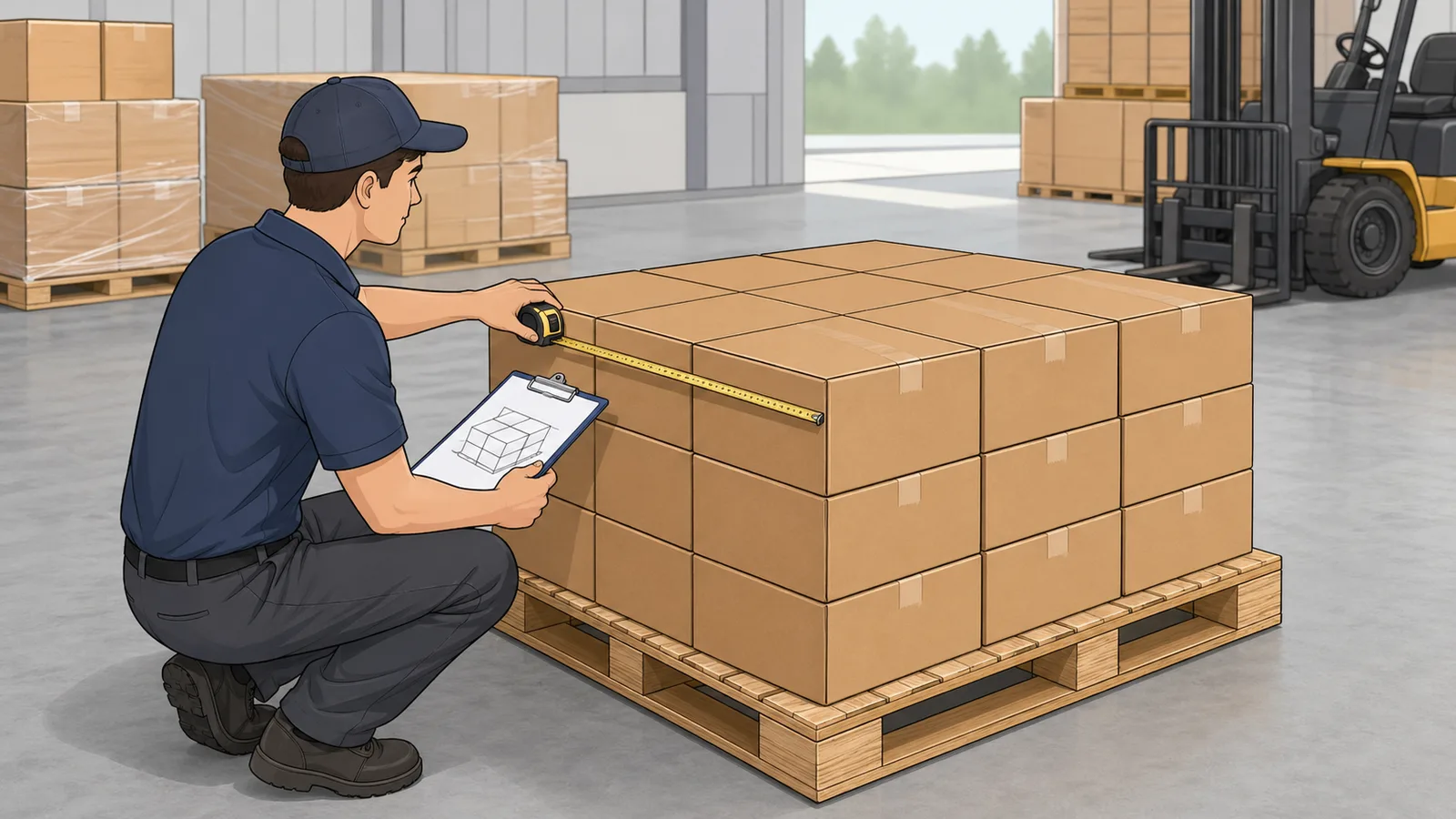
Boxes are arranged in layers on the pallet footprint. The number of boxes per layer is found by dividing the pallet length and width by the box length and width respectively and taking the floor of each result. The calculator automatically tries both orientations of each box to find the arrangement that fits the most per layer.

The number of layers is the floor division of the maximum stack height by the box height. Total boxes per pallet is boxes per layer multiplied by layers.

A more realistic pallet load calculator does not stop there. In practice, planners often subtract the pallet deck height from the allowed loaded height so the usable stacking height is based only on the cartons above the pallet. That prevents an apparently valid TI/HI pattern from exceeding trailer door height, racking clearance, or customer intake rules once the wooden or plastic pallet base is included.

Boxes per layer = ⌊Pallet L / Box L⌋ × ⌊Pallet W / Box W⌋

Floor division ensures only whole boxes are counted. Both orientations are tried.

Layers = ⌊(Max loaded height − Pallet height) / Box height⌋

Number of complete box layers within the usable carton height after the pallet deck is subtracted.

Pallets needed = ⌈Total boxes / Boxes per pallet⌉

Ceiling division rounds up to the next whole pallet.

Standard pallet sizes

The most common pallet in Europe is the EUR or EPAL pallet at 1200 × 800 mm. North America most commonly uses the 48 × 40 inch (1219 × 1016 mm) GMA pallet. The standard maximum height for a loaded pallet, including the pallet itself, is typically 1200–1500 mm depending on warehouse and transport requirements.

For road freight in the UK, standard pallet heights are 1200 mm for a quarter-pallet, and up to 1800–2200 mm for a full high-load pallet. Container loads may be limited further by container internal height.

Those reference sizes matter because the same carton can behave very differently on a Euro pallet, a UK standard pallet, and a 48 × 40 US pallet. A pallet dimensions calculator is therefore useful not only for finding the absolute carton count, but also for comparing how many pallets a shipment will need when you change market, customer, or carrier network.

The calculator also includes common square regional footprints such as 1100 × 1100 mm and 1165 × 1165 mm because export, retail, and regional distribution teams may need to compare the same carton across more than one pallet system. Square pallets can make rotation less important for the pallet itself, but the carton footprint can still change boxes per layer when the carton is rectangular.

TI/HI, pallet height, and gross load limits

In logistics shorthand, TI means cartons per layer and HI means the number of layers stacked vertically. A pallet TI HI calculator is useful because it gives warehouse teams a compact way to describe the build pattern: 9 x 4 means nine cartons per layer and four full layers high. That shorthand appears in retailer routing guides, warehouse slotting plans, and freight tender instructions because it tells the operator how the pallet should physically be built.

Height is not the only limit. Heavy cartons may hit the pallet's gross load allowance before they use the full TI x HI pattern. In that case, the safe answer is not simply to report the geometric maximum. A better boxes per pallet calculator checks carton weight, pallet tare weight, and the gross pallet cap so you can see whether you need fewer full layers or a partial top layer to stay compliant.

This matters for both safety and cost control. If you quote freight from a geometry-only answer, you can end up with overweight pallets that have to be broken down, reworked, or rebooked. If you plan from the weight-limited answer instead, you get a more commercially realistic pallet count and a clearer picture of the spare capacity on the last pallet.

Usable stack height = Max loaded height − Pallet height

Subtracting the pallet deck height gives the vertical space available for cartons rather than the total pallet-plus-load height.

Max boxes by weight = ⌊(Max gross pallet weight − Pallet tare weight) / Box weight⌋

When a gross pallet limit is supplied, the weight-based cap is compared with the TI × HI height-based capacity.

Worked example: how many boxes fit on a pallet and how many pallets are needed

Suppose you have cartons measuring 40 × 30 × 30 cm, a UK standard pallet measuring 120 × 100 cm, and a maximum loaded height of 150 cm. If the pallet itself is 14.4 cm high, the usable stacking height is 135.6 cm. The best layer orientation still fits 9 cartons per layer, but the reduced usable height allows only 4 full layers. That gives 36 cartons per pallet, not 45.

If the shipment contains 100 cartons, the pallet count is therefore ceiling(100 / 36) = 3 pallets. Two pallets are fully loaded with 36 cartons each, and the final pallet carries the remaining 28 cartons. That last pallet still has 8 empty carton positions, which matters when you are planning shrink wrap, labels, staging space, or the total pallet footprint in a trailer or warehouse bay.

Now add a gross pallet weight limit. If each carton weighs 30 lb, the pallet tare is 40 lb, and the gross limit is 700 lb, the weight-safe answer becomes 22 cartons per pallet even though the height-based answer was higher. This is why a proper pallet load calculator should report not just the geometric TI/HI pattern but also the weight-limited recommendation.

How to use the result for shipment planning

A how many boxes fit on a pallet calculator is usually the first step, not the last. Once you know the cartons per pallet, use the shipment quantity to estimate pallets needed, then check the last pallet's spare capacity. That tells you whether the final pallet is materially under-filled, whether it makes sense to defer a small quantity to the next shipment, or whether changing carton dimensions could reduce a whole pallet from the order.

The result is also useful upstream and downstream. Sales teams can quote more accurately when they know whether a shipment is two pallets or three. Warehouse teams can reserve floor space and wrapping materials. Transport planners can then combine the pallet answer with a container loading calculator or shipping weight converter to understand trailer cube, container counts, and booking weight before the load is tendered.

Frequently asked questions

Does the calculator account for pallet height?

Yes. Enter the maximum loaded height as the total height from the floor, including the pallet and cartons, then enter the pallet deck height separately. The calculator subtracts the pallet deck height before it calculates HI, so the layer count is based on the usable carton-stacking height. If you already know a nett stack height above the pallet surface, set pallet deck height to zero to avoid subtracting it twice.

What about mixed box sizes?

This calculator assumes all boxes are the same size. For mixed loads, calculate each box type separately and combine the pallet counts manually, or use specialist warehouse management software that handles mixed palletisation.

Can boxes be rotated on the pallet?

Yes — the calculator tries both orientations (length along the pallet length or along the pallet width) and uses whichever fits more boxes per layer. Height rotation is not considered as boxes are assumed to sit base-down.

What pallet footprint should I enter?

Enter the actual pallet footprint you are using. If you are working with a common standard, that may be 1200 × 800 mm for an EPAL Euro pallet or 48 × 40 in for a GMA-style pallet, but the calculator works with any footprint you supply.

Does the calculator include the empty pallet's own weight?

Yes, when you enter it. The pallet tare weight field lets the calculator add the empty pallet's own weight to the product weight so it can estimate gross pallet weight and gross shipment weight. If you leave pallet tare weight blank or at zero, the weight result only reflects the cartons you entered.

When should I keep the entered carton orientation instead of rotating boxes?

Use the fixed-orientation option when cartons have this-way-up markings, open tops, liquid contents, fragile sides, retailer-facing labels, or internal packaging that assumes a specific footprint. The automatic 90-degree rotation option is useful for regular closed cartons where either base orientation is acceptable, but it should not override handling rules printed on the carton or agreed with the customer.

What does TI HI mean on a pallet?

TI means the number of cartons on each layer of the pallet footprint, while HI means how many layers are stacked vertically. A TI/HI pattern such as 9 x 4 means 9 cartons per layer and 4 full layers high, giving 36 cartons per pallet before any weight limit changes the answer. Retailers, 3PLs, and warehouse teams often use TI/HI because it communicates the physical build pattern much faster than listing every dimension again.

Should maximum stack height include the pallet deck height?

For most real shipment planning, yes. Carrier and warehouse height rules usually refer to the loaded pallet as a whole, not just the cartons. That means the wooden or plastic pallet base consumes part of the allowance. If you ignore pallet height, you can end up with a pallet that looks valid on paper but is too tall for the trailer, container door, or customer intake specification once built.

What if the pallet weight limit is reached before the height limit?

Then the weight-based answer is the safe answer to use. A geometry-only result might suggest that more cartons fit by TI/HI, but once the carton weight and pallet tare are included, the gross pallet limit can force you to stop earlier. In practice that may mean fewer full layers or a partially filled top layer. That is common with dense products such as tiles, metal parts, bottled liquids, or compact machinery.

Why does the last pallet sometimes have empty spaces?

Because pallet counts are rounded up to the next whole pallet. If the shipment quantity does not divide evenly by the pallet capacity, the last pallet is only partially filled. Seeing that spare capacity is still useful because it tells you whether the shipment is close to filling another pallet and whether a small carton-size change or order consolidation could eliminate that extra pallet on future shipments.

Does this pallet loading calculator allow overhang or interlocked patterns?

No. This page assumes a no-overhang rectangular column stack and rotates the carton footprint only by 90 degrees to find the better simple layout. Some specialist palletizing systems allow controlled overhang, mixed patterns, or interlocked layers, but those approaches depend on carton strength, load stability, automation, and customer handling rules. For most planning work, the no-overhang answer is the safer baseline.

Can I use this for container or trailer planning as well?

Yes, but indirectly. First use the pallet calculator to determine the loaded pallet footprint, loaded height, and gross pallet weight. Then use those pallet dimensions as the items in a container or trailer loading workflow. That two-step method is usually more accurate than guessing pallet counts from carton dimensions alone, especially when different markets use different pallet standards.
Guides

Featured in articles

Step-by-step guides that use this calculator to solve real problems.

Also in Logistics

You may also need

Related

More from nearby categories

These related calculators come from the same leaf category, nearby sibling categories, or the same top-level topic.