What charger efficiency should I use?
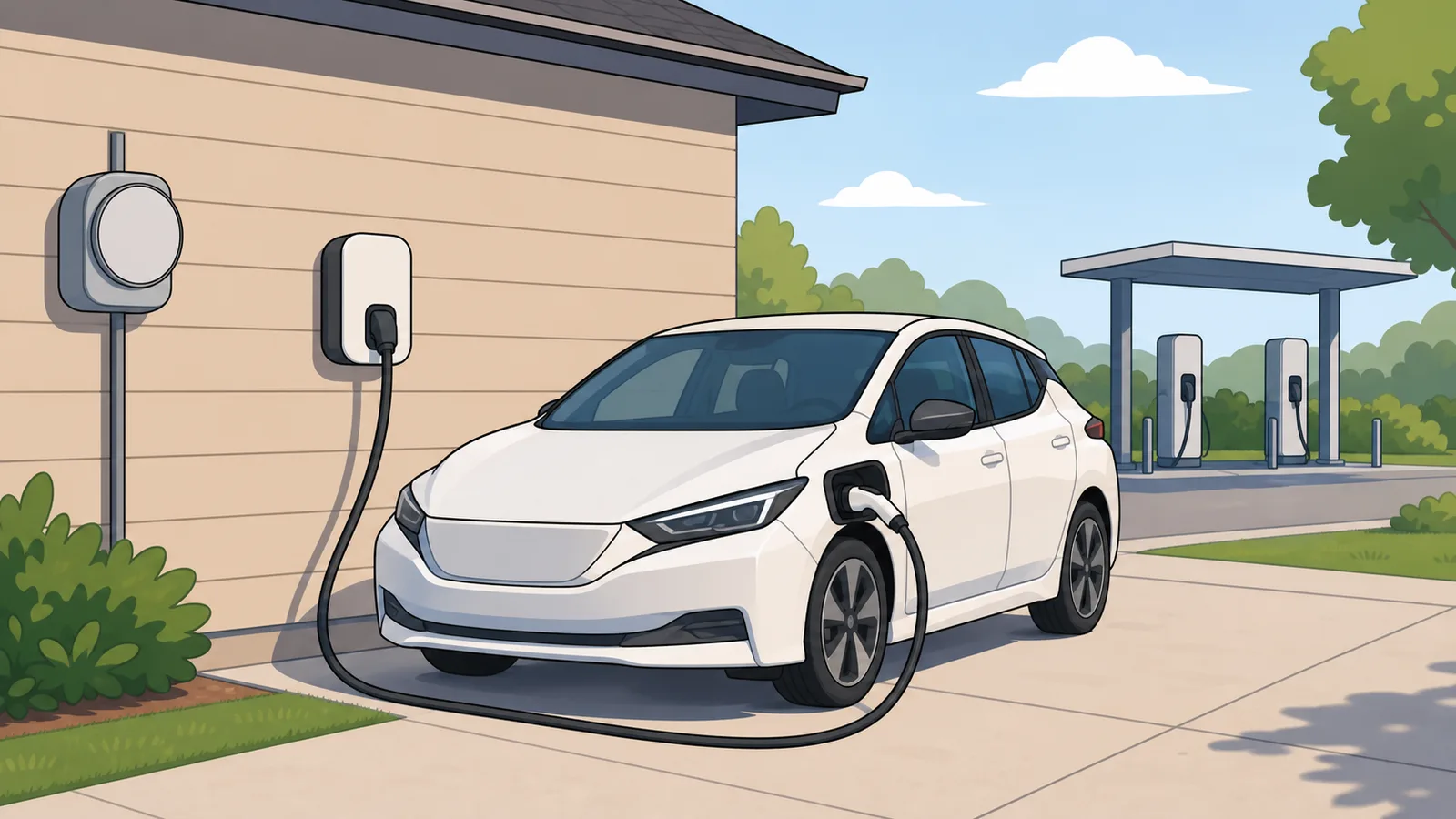
A standard 7 kW home wallbox is often around 90-92% efficient. Older three-pin plug charging can be lower, especially if the car is drawing low power for a long time. The calculator defaults to 90%, which is a reasonable planning estimate for a dedicated home charger.
How do I convert kWh/100km to mi/kWh?
Divide 100 by the kWh/100km figure, then divide by 1.609 to convert kilometres to miles. For example, 18 kWh/100km equals 100 / 18 / 1.609, or about 3.46 mi/kWh. The calculator handles this conversion automatically when you select kilometres as your distance unit.
Does this include public charging costs?
Yes, if you enter an away or public charging tariff. The home charging percentage splits your monthly mileage between home charging and non-home charging, then the calculator reports both portions and the blended total. If you only want a home-charging estimate, set home charging to 100%.
How much does it cost to charge an electric car at home?
Home charging cost depends on battery energy used, charger losses, and your electricity tariff. A practical estimate is monthly miles divided by miles per kWh, divided by charger efficiency, multiplied by your price per kWh. The calculator performs that calculation and also turns it into monthly, annual, per-mile, and per-100-mile costs.
How do I estimate the cost of charging from 20% to 80%?
Enter the battery capacity, set charge from to 20%, and set charge to to 80%. The calculator multiplies battery capacity by the percentage added, adjusts for charger efficiency, and then applies the home, public, or blended tariff to the wall energy.
Why is wall energy higher than battery energy?
Charging is not perfectly efficient. Cable resistance, AC-to-DC conversion, onboard charger losses, battery conditioning, and thermal management can mean the wall meter records more kWh than the battery ultimately stores for driving.
Should I use the tariff from my bill or the advertised unit rate?
Use the price per kWh that best matches the charging period you are modelling. For standard home charging, your electricity bill or tariff sheet is usually best. For overnight EV tariffs, use the off-peak unit rate only if your charging will actually happen during that off-peak window.
Is public rapid charging cheaper than petrol?
Sometimes, but not always. Home or off-peak charging is usually where EV running-cost savings are strongest. Public rapid charging can be much more expensive per kWh, so the break-even comparison depends on your EV efficiency, the rapid-charging tariff, and the petrol vehicle's MPG.
What is a good cost per mile for an EV?
A good cost per mile depends on local electricity prices and vehicle efficiency. Efficient EVs charged at home can be only a few pence or cents per mile, while high public charging tariffs can move the cost much closer to petrol. Use the blended cost per mile when your charging is split across home and public locations.
Why does the calculator ask for home charging percentage?
Because a driver who charges 90% at home and 10% on rapid chargers has a very different cost profile from a driver who relies mostly on public charging. The percentage lets the calculator reflect the charging mix instead of assuming every mile is replenished at one tariff.
Does the petrol comparison use US MPG or UK MPG?
The petrol comparison uses UK imperial MPG because the fuel price input is per litre and the calculation converts UK gallons to litres. If your source uses US MPG, convert it before using the petrol comparison.
Does this include charger installation or standing charges?
No. The calculator estimates electricity running cost only. It does not include charger installation, electrical upgrades, parking, network subscriptions, idle fees, monthly standing charges, taxes outside the entered unit rate, or maintenance.
Why might my real EV charging cost differ from this estimate?
Real cost can differ because your efficiency changes with weather, speed, tyres, traffic, heating or cooling, and payload. Tariffs can also vary by time of day, network, parking location, and membership status. Treat the result as a planning estimate, then compare it with your charger app or electricity bill after a few charging cycles.