Skip to content
Calcipedia
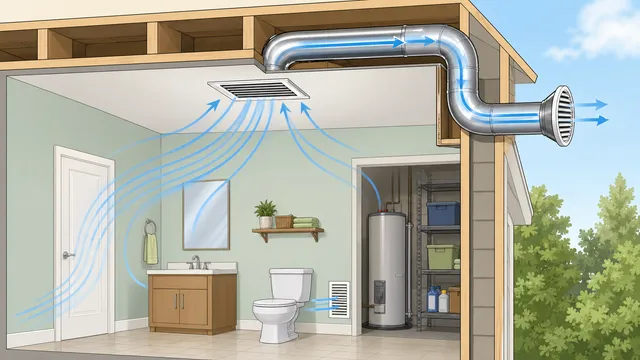
Window Air Conditioner Size Calculator instructional illustration

Window Air Conditioner Size Calculator

Find the right window AC unit capacity in BTU for a room based on dimensions, sun exposure, occupancy, and insulation quality.

Last updated

Window air conditioner size calculator Estimate the right window AC BTU capacity from room dimensions, sunlight, ceiling height, occupancy, kitchen load, and insulation. This page is built for window air conditioner size calculator, window ac size chart, and what size window air conditioner do I need intent, while keeping product-dimension shopping separate from room-cooling math.

Common room-size scenarios

How to use this sizing estimate

Best for: single rooms, bedrooms, offices, kitchens, and one-room living areas where a window unit is realistic.

Not for: product-width shopping, slider-window fit questions, or whole-home central AC sizing.

Comfort warning: oversized window units can short-cycle and leave the room clammy, while undersized units can run constantly and still miss the setpoint.

Result

Recommended window AC capacity

5,000 BTU

The current chart tier is Up to 150 sq ft, then the calculator adjusts for ceiling height, insulation, sun, occupancy, and kitchen load.

Unit size category
5,000 BTU window AC
Room area
100 sq ft
Room volume
800 cu ft
Chart baseline
5,000 BTU
Adjusted baseline
5,000 BTU
Suggested unit count
1

Sun and room gains

Sun adds 0 BTU, occupants add +0 BTU, and kitchen load adds +0 BTU.

Ceiling and insulation

Ceiling height applies a 1x multiplier and insulation applies a 1x multiplier before the chart adders are applied.

Interpretation

This result stays close to the chart baseline because the room loads are fairly typical for a single-space window AC installation.

AdjustmentValue
Sun adjustment0 BTU
Occupant adjustment+0 BTU
Kitchen adjustment+0 BTU
Sizing equation used

Recommended BTU = adjusted chart baseline + sunlight + occupants + kitchen load

5000 + 0 + 0 + 0 = 5000 BTU

← All Plumbing & HVAC calculators

Cooling Capacity

Window air conditioner size calculator guide: match room size to the right BTU range

A window air conditioner size calculator estimates the BTU capacity needed for a single room from room dimensions, sunlight, ceiling height, occupancy, kitchen load, and insulation. This page is built for window air conditioner size calculator, window ac size chart, and what size window air conditioner do i need searches, while keeping product-dimension shopping and small-window fit questions separate from room-cooling math.

How a window AC size chart works

Most room air conditioner charts start with floor area, then assign a baseline BTU tier such as 5,000 BTU for a small bedroom, 6,000 BTU for a modest office, 8,000 BTU for a medium room, and 10,000 to 14,000 BTU for larger living areas. That is why people often search for window air conditioner size chart, window AC BTU chart, or 5000 BTU room size when they are trying to map a room directly to a unit size.

The chart is only the starting point. Sunny rooms, more people, kitchens, taller ceilings, and weaker insulation can all push the requirement above the baseline. A useful calculator therefore needs both the chart tier and the real-world adjustments that explain why one 300 sq ft room may need a very different window unit than another.

Room size to BTU checkpoints for common window units

The usual room-size checkpoints for window units run in clear BTU steps. A 5,000 BTU unit is commonly used for small rooms up to about 150 sq ft. Around 151 to 250 sq ft often points toward 6,000 BTU. Around 251 to 350 sq ft often points toward 8,000 BTU. Rooms from roughly 351 to 450 sq ft often move into the 10,000 BTU range, while larger single rooms can need 12,000 or 14,000 BTU.

Those checkpoints match common searches like 6000 btu air conditioner room size, 8000 btu room size, 12000 btu ac square footage, and 18000 btu ac room size. The reason the page surfaces the chart baseline and then the adjusted result is that the baseline alone can understate demand in sunny, occupied, or kitchen-adjacent spaces.

  • 5,000 BTU: up to about 150 sq ft
  • 6,000 BTU: about 151 to 250 sq ft
  • 8,000 BTU: about 251 to 350 sq ft
  • 10,000 BTU: about 351 to 450 sq ft
  • 12,000 BTU: about 451 to 550 sq ft
  • 14,000 BTU: about 551 to 700 sq ft

What changes the BTU requirement besides square footage

Room area is only the baseline. Sunny rooms often need about 10 percent more cooling than average rooms, while heavily shaded spaces can need less. Extra occupants add body heat, and kitchens can need several thousand additional BTU because of appliance gains. Ceiling height also matters because a taller room contains more air volume than the same footprint at a standard ceiling height.

Insulation matters too. A well-insulated room can stay closer to the chart baseline, while a poorly insulated room may need a larger unit than the same square footage would suggest. That is why this page adds room-adjustment logic instead of pretending that one BTU-per-square-foot number is enough for every window AC decision.

Worked examples: 5,000 BTU bedroom, 8,000 BTU office, and 14,000+ BTU living area

A 10 by 10 bedroom with average sunlight and two occupants typically stays near the 5,000 BTU baseline. A room around 180 sq ft often lands near 6,000 BTU before any sunlight or occupancy adjustments. A 300 sq ft sunny living room with four occupants and kitchen gain can move from an 8,000 BTU chart tier to a recommendation above 14,000 BTU, which is exactly where one standard window unit may stop being the best answer.

These examples show why users searching for 5000 BTU air conditioner room size, 8000 BTU AC room size, or large room window air conditioner need more than a single chart number. The chart tells you where to start; the load adjustments tell you whether that starting point is still realistic.

Can a window AC be too powerful for a room?

Yes. An oversized window air conditioner can satisfy the thermostat quickly but run shorter cycles, which often means less moisture removal and a clammy room. That is why a larger BTU number is not automatically better, especially in bedrooms and lightly loaded rooms where humidity control matters as much as temperature.

Undersizing is the opposite problem. An undersized unit may run constantly and still fail to maintain the setpoint during peak weather. The goal is to land in the right range for the actual room conditions, not simply to buy the smallest or largest unit that happens to fit the opening.

When one window unit is not enough

If the room pushes beyond the typical 14,000 BTU range of a standard single window unit, the better answer is often two units or a different system type. Very large open-plan spaces, long connected rooms, and rooms with strong kitchen gain can exceed the practical reach of one window air conditioner even if the simple room chart seems close.

This is also where the page needs to stay honest about scope. Window AC sizing is not the same problem as central-system sizing or mini-split design. If the adjusted result keeps climbing, use that as a signal to step back and consider whether the room is still a realistic single-window-unit application.

Window AC size versus window opening size

One common keyword trap is that people use the word size for two different questions. Sometimes they mean BTU capacity, which this page calculates. Other times they mean the physical dimensions of the appliance and whether it fits a narrow or short window opening.

This calculator only solves the BTU side. It does not tell you whether a unit fits a specific sash width, slider window, or low-profile opening. After you know the correct BTU range, you still need to check the manufacturer installation dimensions for the actual model you are considering.

Frequently asked questions

What size window air conditioner do I need?

Start with the room size chart, then adjust for sunlight, occupants, kitchen load, ceiling height, and insulation. A small bedroom may stay near a 5,000 BTU unit, while a larger sunny room can need 8,000, 10,000, or even more than 14,000 BTU once the room conditions are accounted for.

How many BTU does a window AC need for my room?

That depends on both square footage and room conditions. The calculator first places the room in a standard BTU chart tier, then adjusts the recommendation for sunlight, extra people, kitchen gains, taller ceilings, and insulation. Those factors often explain why the final answer differs from a simple chart.

What room size matches a 5,000 BTU window air conditioner?

A 5,000 BTU unit is commonly used for rooms up to about 150 sq ft under typical conditions. If the room is sunny, crowded, kitchen-adjacent, or taller than average, the needed capacity may climb above 5,000 BTU even if the floor area looks small.

What room size matches 8,000 BTU or 12,000 BTU?

Around 251 to 350 sq ft often maps to an 8,000 BTU baseline, while around 451 to 550 sq ft often maps to 12,000 BTU before adjustments. Real rooms can land above or below those numbers depending on sunlight, insulation, people, and kitchen gain.

How do sunny rooms and kitchens change the BTU requirement?

Sunny rooms usually need an upward adjustment because solar gain increases the sensible load. Kitchens often need an even larger adder because of cooking heat and appliance activity. That is why a sunny kitchen-dining room can need much more cooling than a same-size bedroom.

Can a window AC be too powerful for a room?

Yes. An oversized window unit can cool the air quickly and shut off before it removes enough moisture, leaving the room less comfortable. Bigger is not always better, especially in humid climates or lightly occupied bedrooms where dehumidification matters.

What happens if a window AC is undersized?

An undersized window AC may run nearly nonstop during hot weather and still fail to keep the room comfortable. It can also struggle more with solar gain and kitchen loads because it lacks reserve capacity when the room conditions peak.

When do I need more than one window air conditioner?

If the adjusted load moves beyond the usual single-unit ceiling, often around 14,000 BTU, multiple units or a different system type may make more sense. This is common in very large living areas, open-plan rooms, and kitchen-adjacent spaces with strong internal gains.

Is this different from central AC sizing?

Yes. Window AC sizing is a room-level cooling problem. Central-system sizing uses a whole-home load method that considers the building envelope, ducts, infiltration, orientation, glazing, and many other factors. This page is intentionally narrower than a central AC or Manual J workflow.

Does this calculator tell me whether the unit fits my window opening?

No. This page calculates BTU capacity, not physical appliance dimensions. After you know the right BTU range, check the product width, height, sash requirements, and installation instructions for the model you want.

Also in Plumbing & HVAC

Related

More from nearby categories

These related calculators come from the same leaf category, nearby sibling categories, or the same top-level topic.