How much protein does a child or teenager need?
Protein needs per kilogram of body weight are generally higher in children than adults because growth is part of the picture. The exact reference depends on age band, and active or rapidly growing teenagers may sit nearer the upper end of a practical planning range even though the answer should still stay food-first.
How much protein does a teenager need per day?
Teen protein needs are usually set from age-band reference values and then interpreted alongside appetite, growth, and activity level. Active teenagers may sit toward the upper end of a practical range, but most do not need to chase bodybuilding-style targets. The calculator shows a sensible starting point rather than a rigid rule.
How much protein does a child need by age?
Younger children and teenagers do not use the same reference values, which is why age bands matter. A calculator that only uses one adult-style protein rule can be misleading. Using age bands helps you see the difference between a preschooler, a school-age child, and an older teen.
Can children get enough protein from a vegetarian diet?
Yes, with planning. A varied diet including dairy, eggs, legumes, tofu, and whole grains can meet protein requirements. Vegan children need careful attention to vitamin B12, iron, zinc, and calcium alongside protein. A paediatric dietitian can advise on appropriate intakes.
What are good high-protein foods for kids?
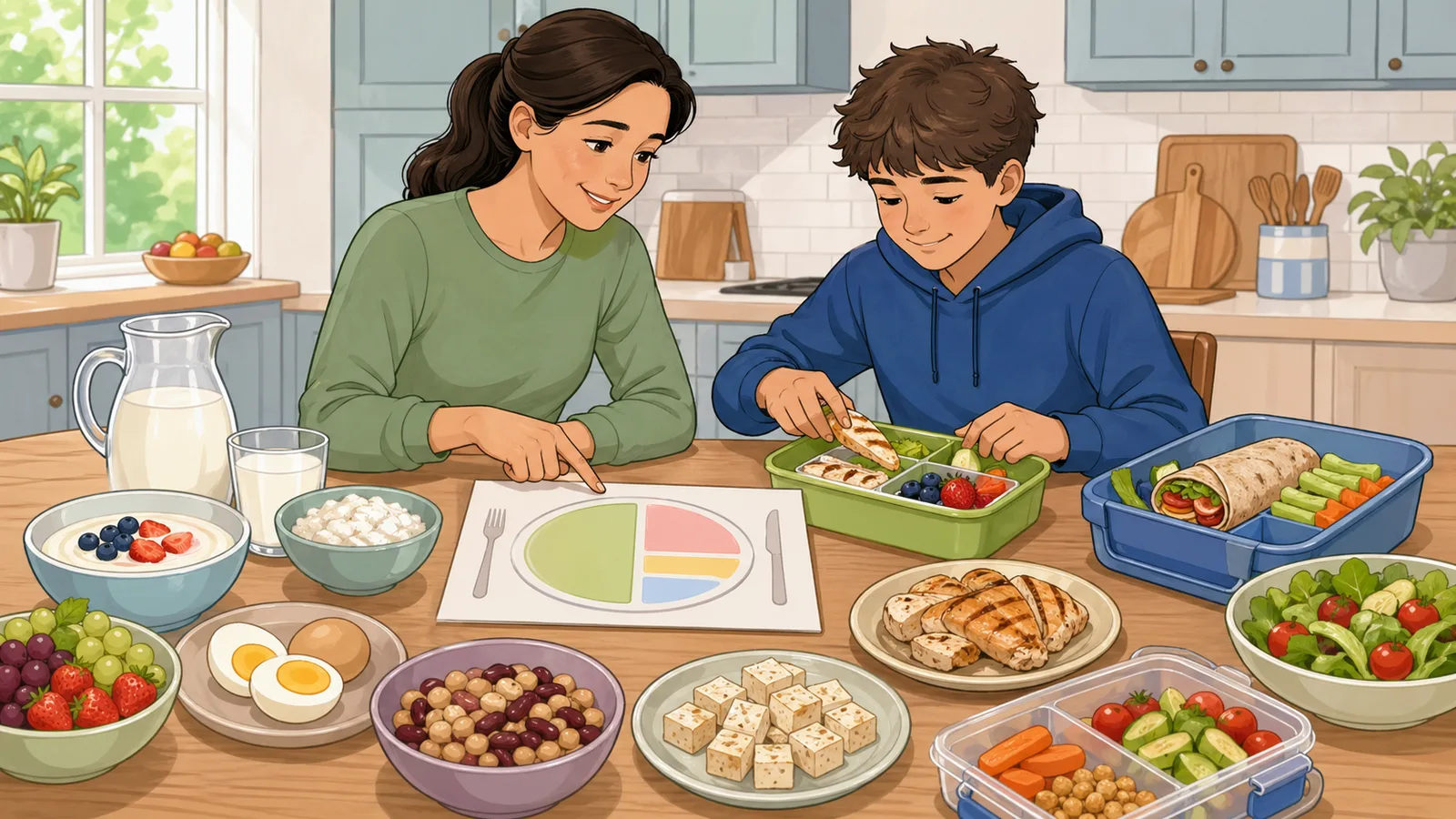
Useful choices include milk, yogurt, cheese, eggs, beans, lentils, tofu, soy foods, fish, poultry, and lean meat. The easiest foods are usually the ones that fit into normal breakfasts, lunchboxes, and snacks without forcing every meal to become a macro project.
Can a teen athlete need more protein?
Yes, a teen who trains hard may need more protein than a less active child or younger teen, but the target should still be age-appropriate and food-first. Training load, total calories, and meal timing matter too. Protein supplements are not automatically required just because a teenager plays sport.
How much protein does a 14-year-old need?
A 14-year-old usually falls into the 14 to 18 years age band, so the best estimate still depends on body weight and the wider eating pattern. That is why a body-weight calculator is more useful than copying a single grams-per-day number from a generic article. The result should then be checked against real meals and snacks rather than treated as a bodybuilding target.
Do healthy children need protein shakes or supplements?
Usually not. Most healthy children can meet protein needs through ordinary meals and snacks. Supplements may occasionally be used under professional advice, but they are not the normal starting point for everyday child nutrition.
Can too much focus on protein crowd out other foods a child needs?
Yes. If families become too focused on hitting a protein number, children can end up eating less fruit, vegetables, whole grains, and other foods that matter for energy, fibre, and micronutrients. That is one reason this page keeps the advice food-first and shows a planning band rather than pushing the highest number possible.
How can I spread protein across the day for a child or teen?
The daily total matters most, but it is often easier to reach if protein appears at breakfast, lunch, dinner, and one or two snacks. The exact split does not need to be perfect. A steady pattern of normal food is usually more realistic than trying to make one meal carry the entire target.
Should a picky eater use bars or powders to reach the number?
Not automatically. Sometimes the easier fix is to identify two or three accepted foods that reliably add protein at breakfast, lunch, or an after-school snack. Bars and powders can look like simple solutions, but they do not automatically solve the bigger question of whether the overall diet is balanced, varied, and sustainable for the child.
What signs mean a child needs professional nutrition advice instead of a public calculator?
Poor growth, significant weight loss, chronic low appetite, very restricted eating, a suspected eating disorder, or a medical condition affecting intake are all reasons to get professional help. Those situations need more than a grams-per-day estimate.
When should I ask a paediatrician or dietitian instead of relying on the calculator?
Ask for professional advice when a child is underweight, not growing as expected, eating very restrictively, training heavily, or dealing with a medical issue that changes intake. In those cases, the calculator can help frame the question, but it should not be the final answer.
Why does the same body weight give a different answer in a younger child versus a teenager?
Because this page uses age-banded protein guidance rather than pretending one grams-per-kilogram rule works for every stage of growth. A younger child, an early teen, and an older teen may all weigh the same on paper while still sitting in different developmental contexts. That is why the calculator now shows how the same body weight compares across age bands.