What type of salt should I use for brining?
Use non-iodised salt — kosher salt or pickling salt are ideal. Table salt with iodine can inhibit lacto-fermentation and can taste a little sharper in some recipes. The most reliable way to keep recipes consistent is to weigh the salt rather than measuring only by spoon volume, because different salts pack differently.
Does the brine need to be boiled?
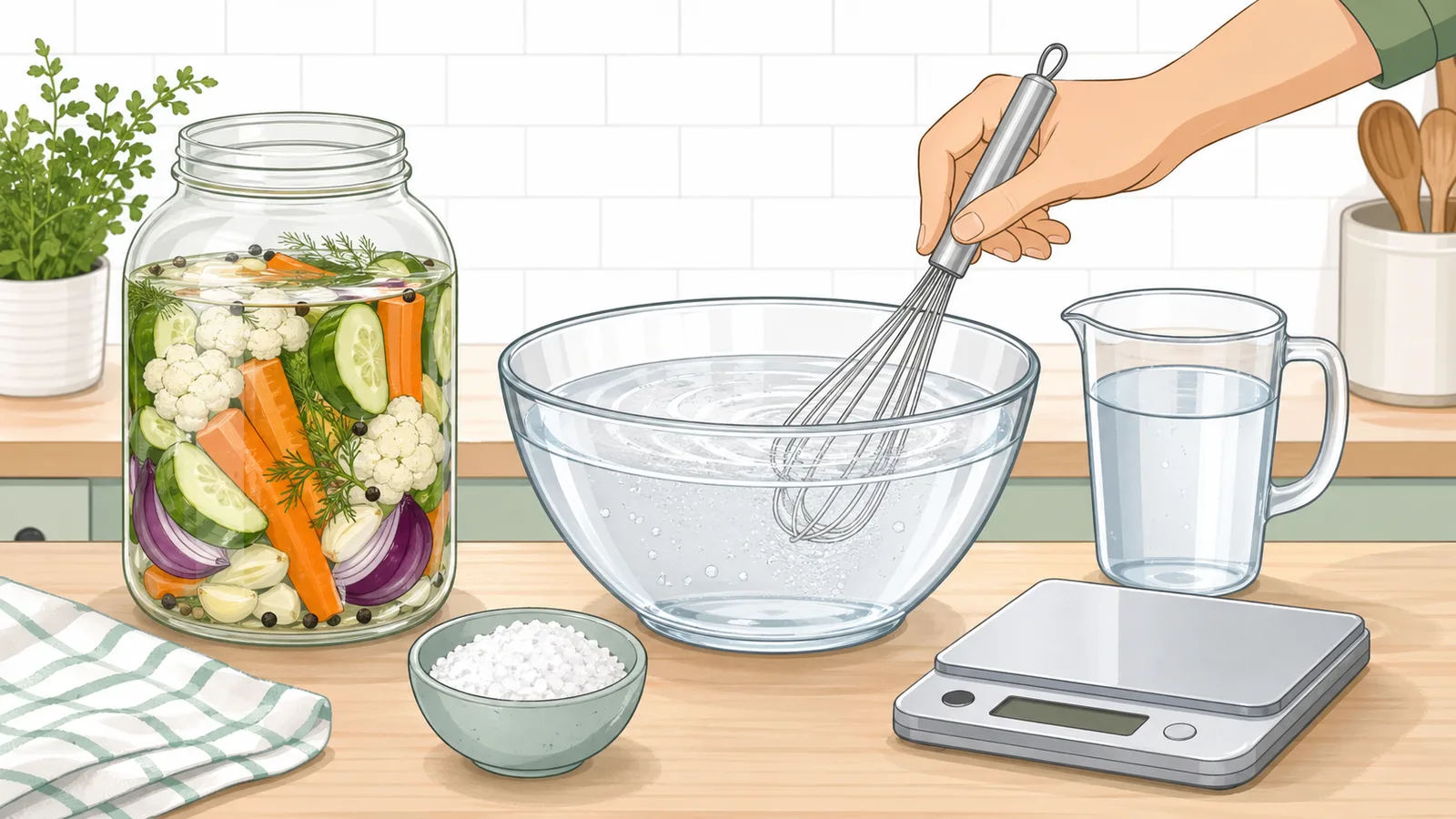
For hot brines used to steep aromatics such as garlic, herbs, or spices, a brief simmer helps dissolve the salt and infuse flavour. After that, cool the brine completely before adding meat or vegetables. For plain cold brines, the salt dissolves well in cold water with stirring, especially if you use finer salt.
How long should I brine chicken?
A whole chicken often benefits from about 12–24 hours in a 5–6% wet brine kept in the refrigerator, while smaller pieces usually need less time. The exact timing depends on recipe style, cut size, and how salty you want the finished meat to taste, so use a tested recipe if the result matters for food safety or a specific texture.
What salinity should I use for vegetables?
A 2–3% brine is a common starting point for fermented vegetables such as sauerkraut, kimchi, and pickles. Lower than that can make spoilage more likely, while much higher can slow or stall fermentation. If you are following a tested fermentation recipe, use its exact salt percentage and time guidance.
What salinity should I use for poultry or pork?
A 5–6% wet brine is a common range for chicken and turkey, and many pork recipes also live in the 5–8% zone depending on the cut and the amount of seasoning you want left in the meat. Heavier curing-style recipes go stronger and usually follow a more specific method than a general-purpose brine calculator can model.
Is this calculator using water-weight or total-solution salinity?
It uses the water-weight definition: grams of salt per 100 grams of water. The result also shows the final-solution percentage so you can compare the answer with recipes or regulations that define brine strength as salt divided by salt plus water.
How much salt is in 1 gallon of 5% brine?
About 189.3 g of salt. The same 5% recipe is roughly 12 tablespoons or 33 teaspoons of table salt, depending on the spoon conversion you use. Weighing the salt is still the most reliable way to scale the recipe.
Can I use this for pickles and vegetable fermentation?
Yes, as a starting point for wet brines. A 2–3% range is common for fermented vegetables, and the calculator makes it easy to scale from a small jar to a bigger crock. If a tested fermentation recipe gives a specific salt amount or total-solution percentage, follow that recipe first.
Does kosher salt change the result?
The salt mass needed does not change, but spoon measurements do. Kosher salt crystals are larger and less dense than table salt, so a tablespoon of kosher salt weighs less than a tablespoon of fine table salt. That is why the calculator shows grams first and spoon conversions second.
What is the difference between wet brine and dry brine?
Wet brine dissolves the salt in water and measures the recipe by water volume. Dry brine applies salt directly to the food and usually uses the food's own weight instead of the water volume. If your recipe is written as a dry brine or equilibrium brine, this calculator is still useful for context, but it is not the full recipe method.
Can I use this for vinegar pickles or refrigerator pickles?
Not as the full recipe. This calculator is best for salt-water brines such as fermentation brines and wet meat brines. Vinegar pickles depend on acidity and water-to-vinegar ratios, so a tested pickle recipe is more important than the salt percentage alone.
Why does Diamond Crystal kosher salt need more teaspoons than table salt?
Because the crystals are lighter and less dense by volume. The gram amount of salt you need is the same, but a teaspoon of Diamond Crystal kosher salt weighs much less than a teaspoon of fine table salt. That is why spoon conversions change with salt type while gram-based conversions do not.
Can I brine already enhanced or self-basting poultry?
Use caution. Many enhanced birds already contain added salt solution, so a standard poultry brine can oversalt them quickly. If the packaging says enhanced, self-basting, or contains up to a certain percentage of solution, shorten the brine or skip it unless a tested recipe says otherwise.
What is equilibrium brining?
Equilibrium brining calculates salt from the combined weight of the food and the liquid so the whole system settles toward one target percentage. It is useful for some barbecue and curing workflows, but it is not the same as a simple water-only wet brine calculation.
Can I calculate how much water I need for a known salt amount?
Yes. Switch the calculator to water-needed mode, enter the salt weight in grams, and choose the target salinity. The tool rearranges the brine ratio so it can tell you how much water to add, which is useful when you have already weighed the salt or are scaling a partial recipe.
How do I check the brine percentage after mixing salt and water?
Use the brine-percent mode. Enter the water volume and the salt weight, and the calculator will report the water-weight brine percentage plus the final-solution percentage. That makes it easier to compare a homemade salt-water mix with a recipe that says 3% brine, 5% brine, or another target concentration.