Estimate lot size in acres, hectares, square feet, square yards, and square metres from common parcel shapes, known area totals, or split-lot sections.
Last updated
Parcel acreage estimator Estimate acreage from rectangles, triangles, circles, or trapezoids, then total multiple sections when an irregular lot is easier to measure in parts.
Measurement unit
Common acreage examples
Section 1
Rectangle
Shape
Add separate sections for irregular parcels measured as simple shapes, then total them into one acreage estimate.
Enter at least one measured section Provide positive dimensions for a rectangle, triangle, circle, or trapezoid to calculate acreage and area conversions.
Acreage calculator for lot size, land area, acres, and hectares
An acreage calculator turns lot measurements or a known land-area figure into acres, hectares, square feet, square yards, and square metres so you can compare parcels, listings, and land-use plans without reworking the geometry by hand.
How acreage is calculated
For rectangular lots the calculation is straightforward: multiply length by width to get the total area in square feet, square yards, or square metres, then convert that result into acres or hectares. One acre equals 43,560 square feet exactly, one acre equals 4,840 square yards exactly, and one hectare equals 10,000 square metres exactly according to NIST conversion references.
Irregular parcels are often measured as several simpler shapes. That is why this acreage calculator totals separate rectangles, triangles, circles, or trapezoids before converting the combined result into acres and hectares. In practice that mirrors how people measure a lot from field notes, plat sketches, GIS exports, or frontage-and-depth descriptions when the parcel is not one clean rectangle.
The most useful workflow is to measure each clean section in the same unit, calculate the area of each section, and then sum those sections into one total acreage figure. Doing that usually produces a much better planning estimate than forcing an irregular parcel into a single average length and width.
If a listing, plat, GIS export, or site plan already gives you total square feet, square yards, or square metres, use the known-area section instead of rebuilding the shape. That direct workflow covers the common square-feet-to-acres and square-metres-to-acres intent without losing the ability to add measured rectangles, triangles, circles, or trapezoids in the same total.
Rectangle area = length × width
Use this for straightforward lot dimensions where the parcel can be treated as a rectangle.
Triangle area = 1/2 × base × height
Useful when one part of the parcel tapers to a point or forms a simple wedge.
Trapezoid area = 1/2 × (a + b) × h
Useful for lots with two parallel sides of different lengths, such as a parcel that widens toward the road or the rear boundary.
Acres = square feet ÷ 43,560
This is the standard acreage conversion used in property records and land comparisons.
Known area section = entered area × quantity
Use this when a plan, listing, or GIS record already provides an area figure and you only need acreage conversion or section totaling.
When to enter a known area instead of dimensions
Competitor acreage tools often split the workflow between a dimensions calculator and a map or square-foot converter. This page keeps those tasks together by letting you enter a known area as its own section. That is useful when the source information is already written as 10,890 square feet, 4,000 square metres, or 0.5 hectares rather than length by width.
A known-area section is also useful for mixed evidence. For example, you might know the recorded square footage for the main parcel from a tax record, then measure an added paddock as a rectangle or a triangular corner from a field sketch. Enter the recorded area as one section and the measured piece as another, then read one combined acreage estimate.
The key is to keep units straight. If the selected measurement unit is feet, the known-area field expects square feet. If the selected unit is metres, it expects square metres. Use the common acreage examples to sanity-check a quarter-acre lot, a one-acre rectangle, a one-hectare metric plot, or a split-lot estimate before entering your own figures.
Use known area for square-foot totals from listings, deeds, tax cards, plats, or GIS exports.
Use rectangle, triangle, circle, and trapezoid sections when you measured dimensions yourself.
Use split sections when an irregular lot can be approximated by adding several clean shapes.
Use a map-based acreage tool when you need to trace a curved or multi-vertex boundary from satellite or GIS imagery.
Which parcel shapes this acreage calculator handles well
A rectangle is the best fit for standard frontage-and-depth lots, paddocks, and fields with roughly parallel boundaries. A triangle is useful when a parcel narrows sharply at one end. A circle can help with round pens, centre-pivot irrigation zones, or circular landscaped areas. A trapezoid is useful for lots with two parallel edges of different lengths, which is common in road-frontage parcels or sites that widen or narrow across their depth.
If the parcel bends, steps, or changes width more than once, split it into two or more sections instead of choosing one approximate shape for the whole site. For example, a main rectangle plus a rear triangle is often a better approximation than averaging the full frontage and depth into a single rectangle.
This is still a planning tool rather than a boundary-survey engine. It works best when the parcel can be represented by clean measured shapes and when you understand that the output is an estimate for comparison, budgeting, or land-use planning rather than a legal land description.
Worked acreage example
A 660 ft by 66 ft parcel covers 43,560 square feet, which is exactly 1 acre. The same parcel is 4,840 square yards, 4,046.8564224 square metres, and about 0.40468564224 hectares. That is the classic frontage-by-depth example for checking whether a lot description really represents one acre.
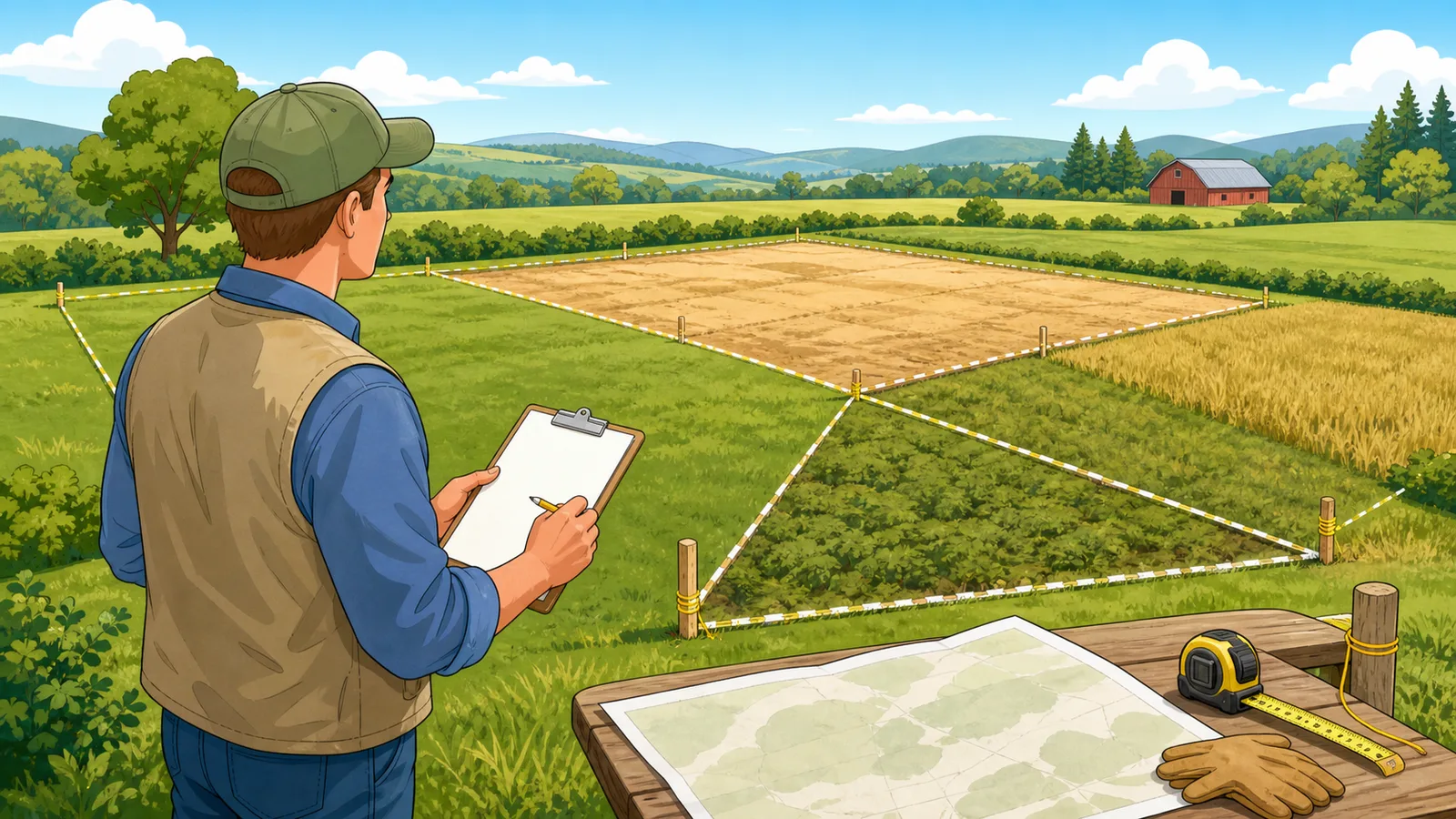
For an irregular example, imagine a parcel made up of a 200 ft by 150 ft rectangle plus two triangular side pieces, each with a 100 ft base and an 80 ft height. The rectangle contributes 30,000 square feet. Each triangle contributes 4,000 square feet, so both triangles add 8,000 square feet. The total is 38,000 square feet, which is about 0.8724 acres.
That kind of split-lot example is exactly why acreage calculators are useful for property assessment, fencing plans, irrigation planning, and listing reviews. Instead of approximating the whole site with one average depth, you can measure each clean section and total them into a more defensible estimate.
How to interpret lot size, frontage, depth, and acreage together
Acreage tells you the overall land area, but it does not describe the parcel shape by itself. Two lots can both be one acre and still have very different frontage, buildable width, setbacks, or usable outdoor space. That is why frontage and depth still matter even after you know the acreage.
A narrow, deep lot may have the same area as a wider, shallower lot but perform very differently for access, subdivision, drainage, or building layout. When you review listings, compare acreage with the actual boundary dimensions rather than assuming the acre figure tells the whole story.
This calculator helps with that interpretation by keeping the original measured sections visible alongside the converted area. Use the area result for cross-listing comparisons, then return to the underlying measurements when you need to think about layout, fencing, planting, driveway access, or which portion of the site is realistically usable.
When to use acres, hectares, square feet, or square metres
Use acres when comparing rural land, lots, and property listings in markets that still describe parcel size in acres. Use hectares when your planning documents, maps, or reporting work in metric land units. Use square feet or square metres when you need the raw area for site planning, coverage calculations, seeding, surfacing, or material estimates.
Many people search for a square-feet-to-acres calculator when what they really need is a quick way to understand whether a set of lot dimensions is large or small in property terms. That is why seeing all of the common units together is useful: a result that looks abstract in acres often becomes clearer in square feet, while a metric planning result often becomes clearer in hectares or square metres.
If you are switching between plans, listings, and supplier documents, keep the same measured dimensions and let the calculator do the conversion rather than rounding one unit and then converting the rounded figure again. That reduces cumulative rounding error and keeps your comparison cleaner.
What this result does not cover
This calculator does not replace a formal boundary survey, deed description, GIS-certified parcel layer, or legal land record. If a parcel is curved, angled in multiple directions, split by easements, or described by bearings and distances rather than simple lengths, the final figure should be checked against the recorded survey or plat.
It also does not account for unusable land, drainage features, rights-of-way, access strips, slope, wetlands, local zoning setbacks, or the difference between gross lot area and buildable area. Those factors matter for buying, selling, farming, and development decisions even when the acreage conversion itself is mathematically correct.
Use this page as a land-area planning tool, not as proof of legal acreage. For transactions, tax assessments, or subdivision work, the recorded survey and local authority records take priority over any simple acreage estimate.
Frequently asked questions
How many square feet are in an acre?
One acre equals 43,560 square feet exactly. That is the standard conversion used in property measurement, surveying, and real-estate comparisons. If you already know the lot area in square feet, divide by 43,560 to convert it into acres.
How do I convert square metres to acres?
Divide the area in square metres by 4,046.8564224 to get acres. If you prefer, you can convert square metres to hectares first by dividing by 10,000, then convert hectares to acres using the factor of about 2.47105 acres per hectare. Using the original square-metre figure directly is usually the cleanest method because it avoids extra rounding.
What is the difference between an acre and a hectare?
An acre is a customary land-area unit equal to 43,560 square feet. A hectare is a metric land-area unit equal to 10,000 square metres. One hectare is about 2.47105 acres, so a hectare is noticeably larger than an acre.
Should I use acres or hectares when comparing land?
Use acres when you are working with property listings, rural land records, or agricultural references that are written in acre-based terms. Use hectares when your plans, mapping tools, or reporting are metric. If you are comparing lots across different sources, keep both figures visible so you can move between listing language and planning documents without losing the original scale.
Can I calculate acreage from a known square-foot lot size?
Yes. Choose feet as the measurement unit, pick the known-area section type, and enter the square-foot total. For example, 10,890 square feet converts to 0.25 acres because it is one quarter of 43,560 square feet.
Can I mix measured sections with a known area from a listing or GIS record?
Yes. Add the known area as one section, then add measured rectangles, triangles, circles, or trapezoids as additional sections. The calculator totals the valid sections before converting the combined area into acres, hectares, square feet, square yards, and square metres.
When should I use a map acreage calculator instead?
Use a map acreage calculator when the property boundary has many vertices, curved edges, or map-only coordinates that are easier to trace than measure as simple sections. This page is best for dimensions, known area figures, and split-lot planning estimates.